The Missing Bridge —
Transform your practice through MyoSomatic Bodywork
A five-day practitioner training that bridges physical technique and profound transformation — integrating myofascial release, craniosacral therapy, and somatic dialogue, for practitioners ready to deepen the impact of their touch.
Watch the video to learn the treatment philosophy, approach, and outcomes.
To enroll or place a deposit, we begin with a conversation — so I can meet you, answer your questions, and make sure you're prepared to get the most from this experience.
 Daniel J. Wicker, LMBT
NCBTMB Approved Provider #1002447 · 35 CE hours
What you'll learn
- Myofascial techniques that sense subtle release and expansion in tissue — creating breadth and depth of sensation that help your clients connect and feel their bodies more
- Craniosacral skills — from palpating the cranial rhythm to full-session sequencing — where physical touch activates deep states of nervous system calibration
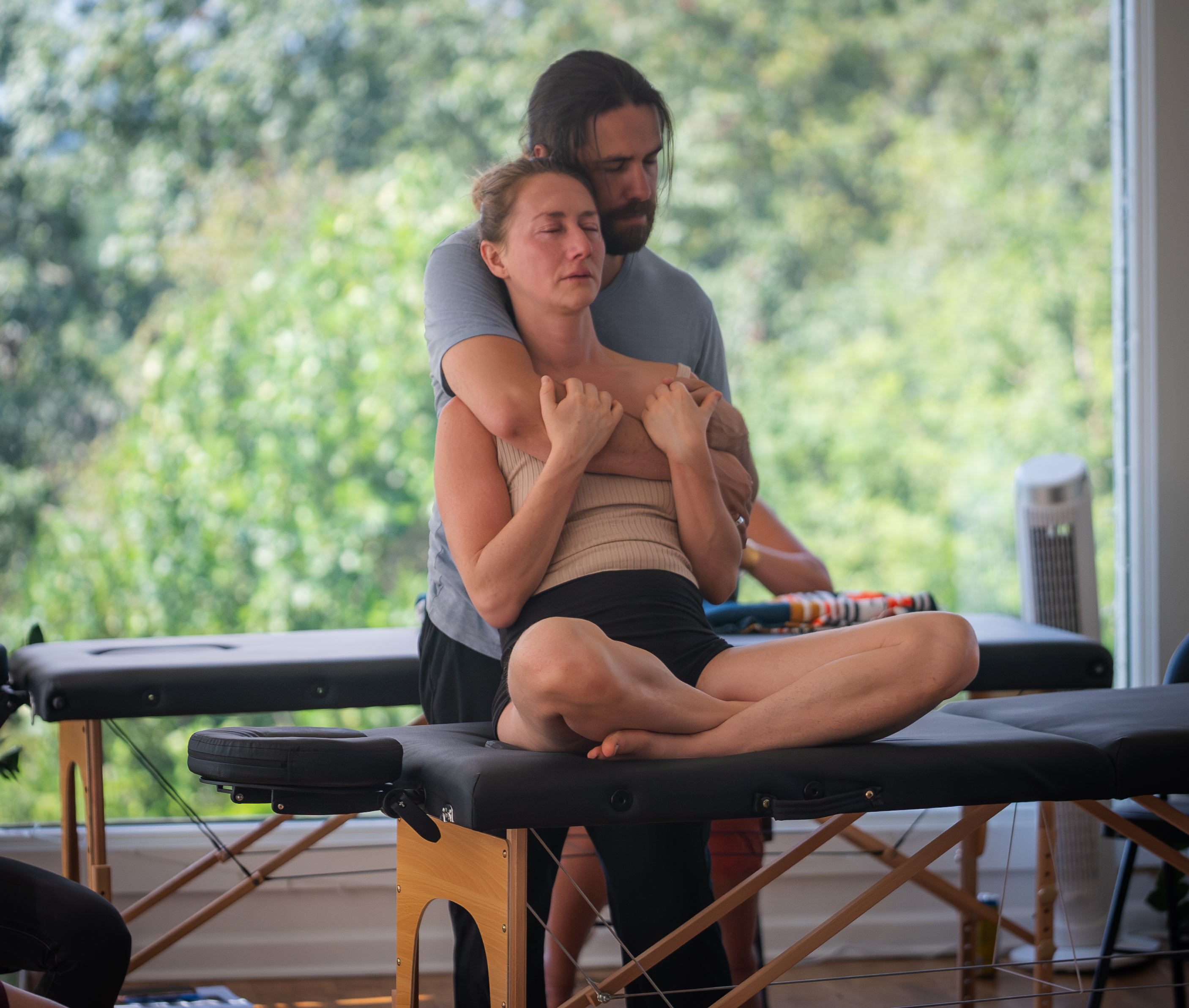
- Somatic dialogue: reading non-verbal cues, inviting client participation, and holding emotional release with ethics, safety, and trauma-informed presence
- A cohesive framework that recognizes the body as a totality rather than fragmented systems
Is this course for you?
- Manual therapists — massage, PT, bodyworkers — seeking to deepen their impact beyond physical relief
- Energy workers and somatic practitioners wanting to integrate skilled touch into their practice
- Healing arts professionals who sense there's a missing element in their current approach
- Practitioners who've collected multiple modalities but feel something essential remains elusive


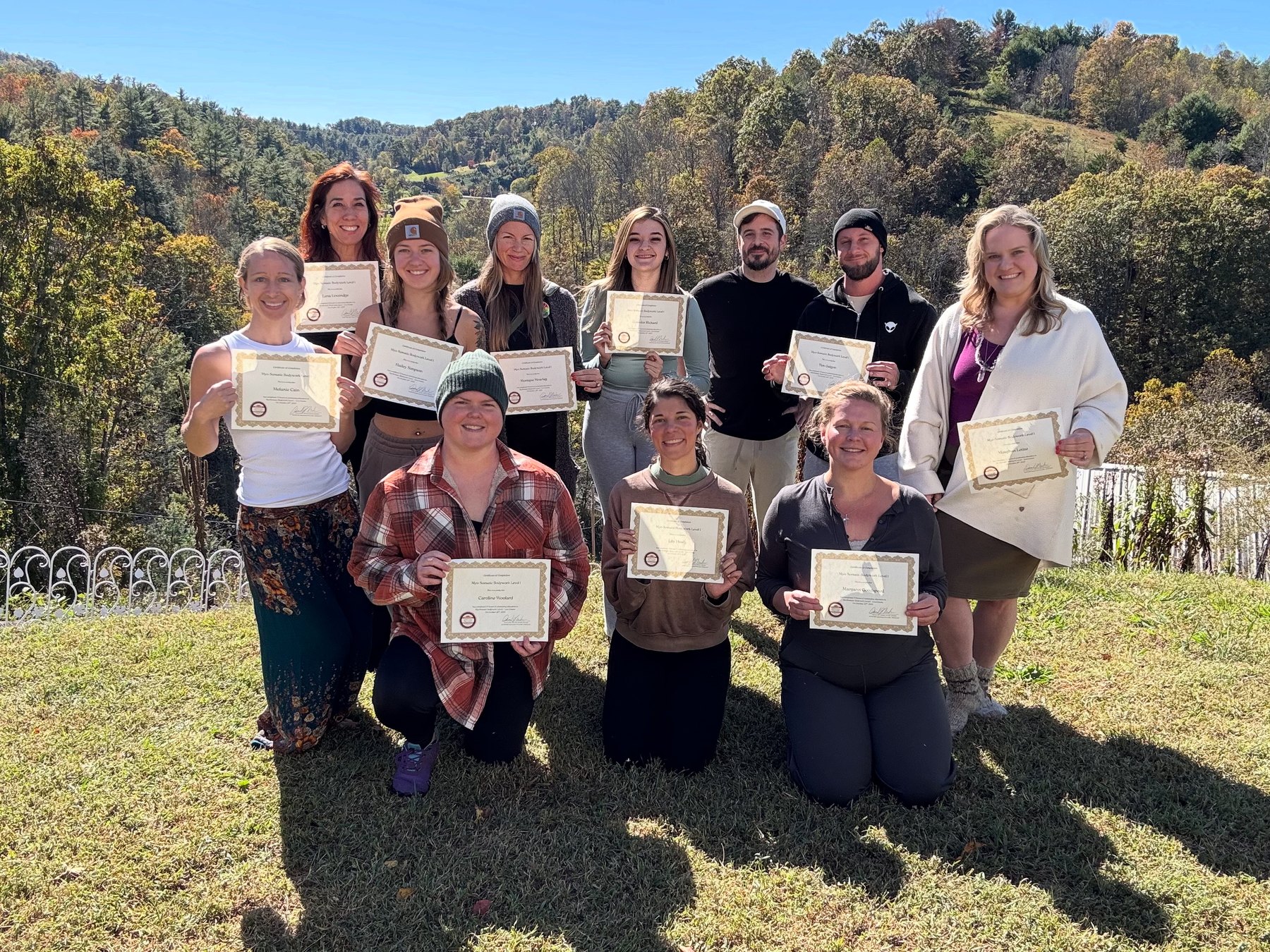

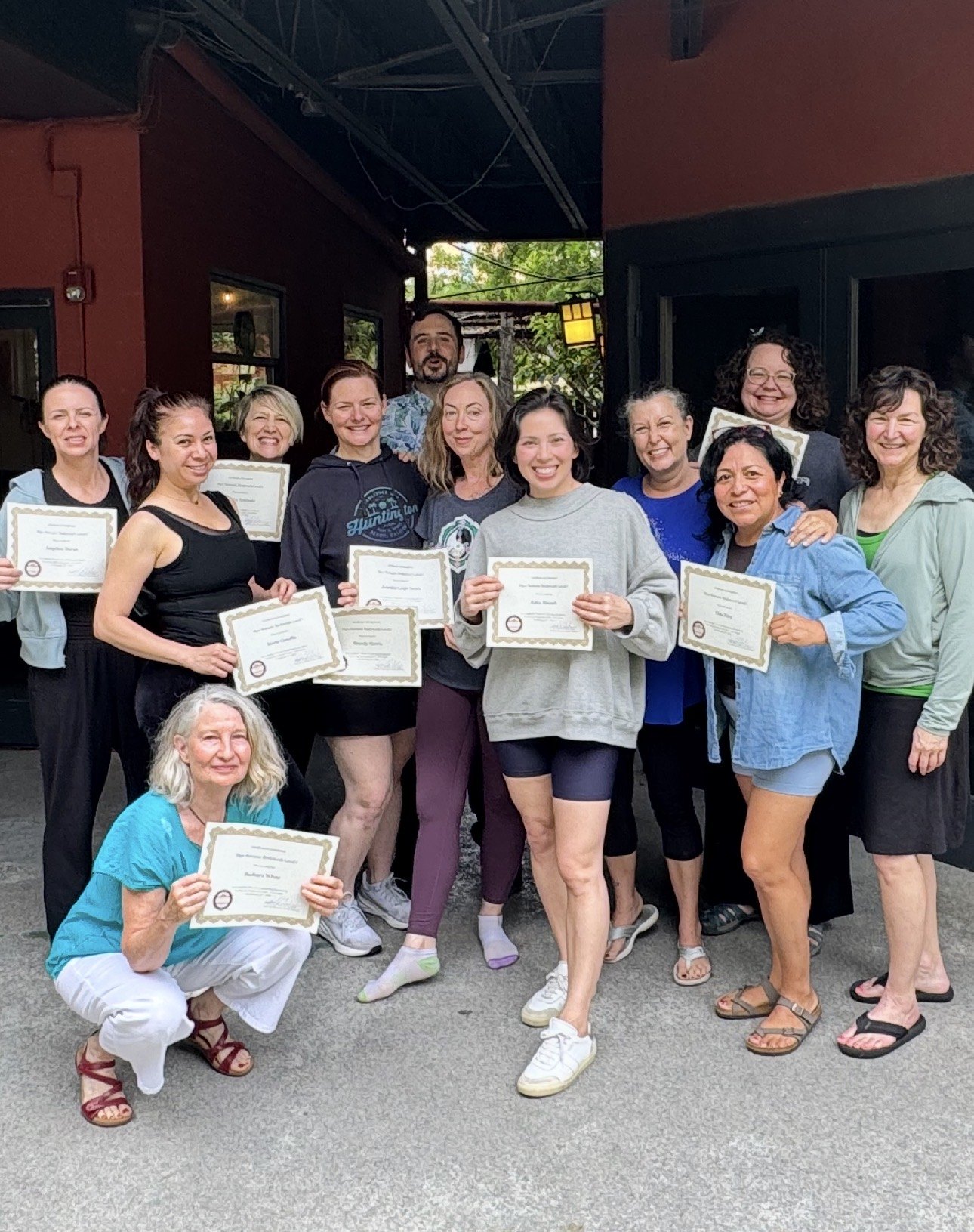
Every class ends the same way — certificates in hand.
Your five-day journey
Day 1 Unveiling the Fascial Matrix
- Myofascial Anatomy: fascial vs. musculoskeletal perspectives
- Adhesions, tensegrity & the extracellular matrix
- Mechanoreceptors, brain regions, and somatic implications
- Deconstructing myofascial touch: palpation exercises, demonstration & practice
- Myofascial approaches for sacrum, lower back & hips
Day 2 Myofascial Release Techniques
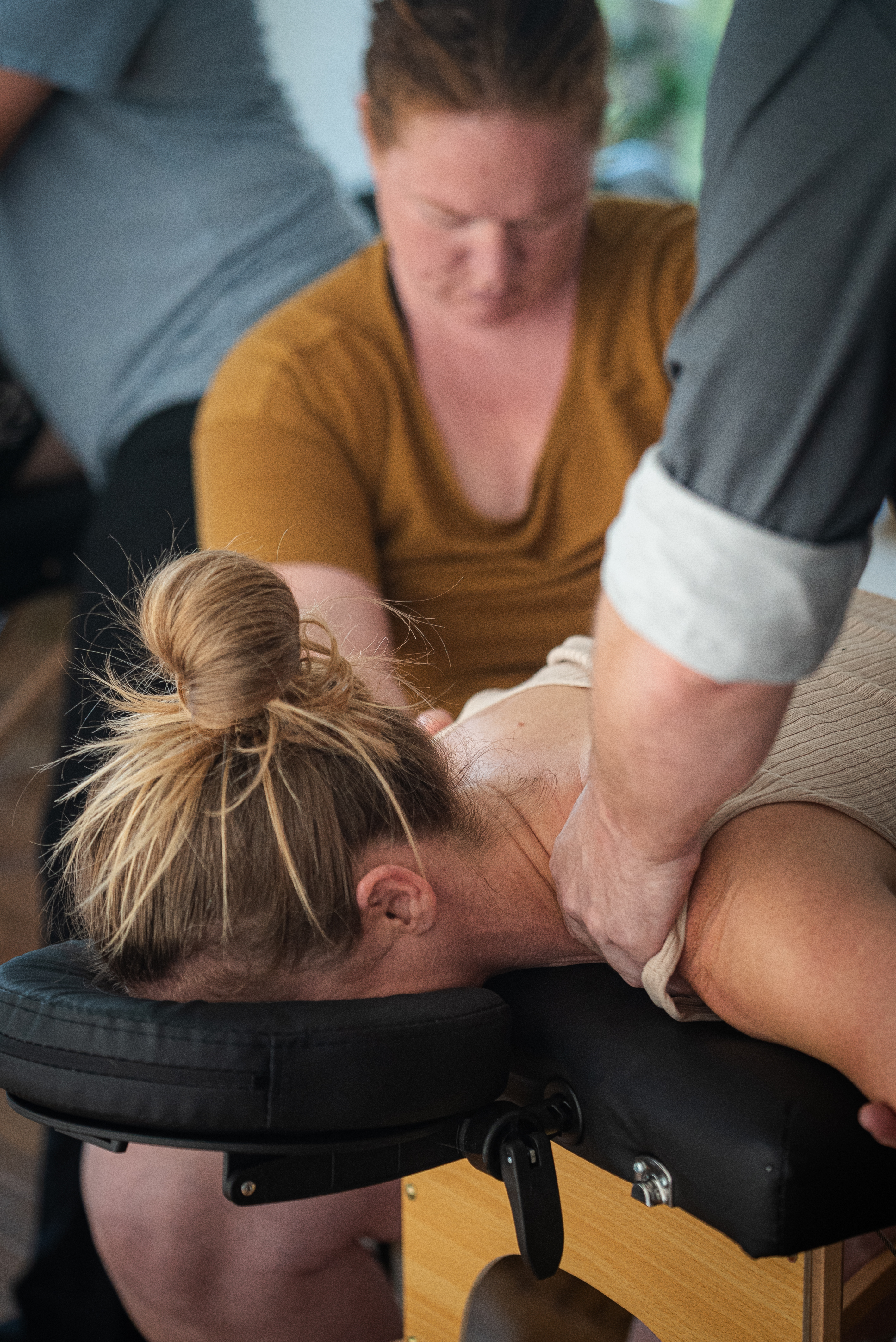
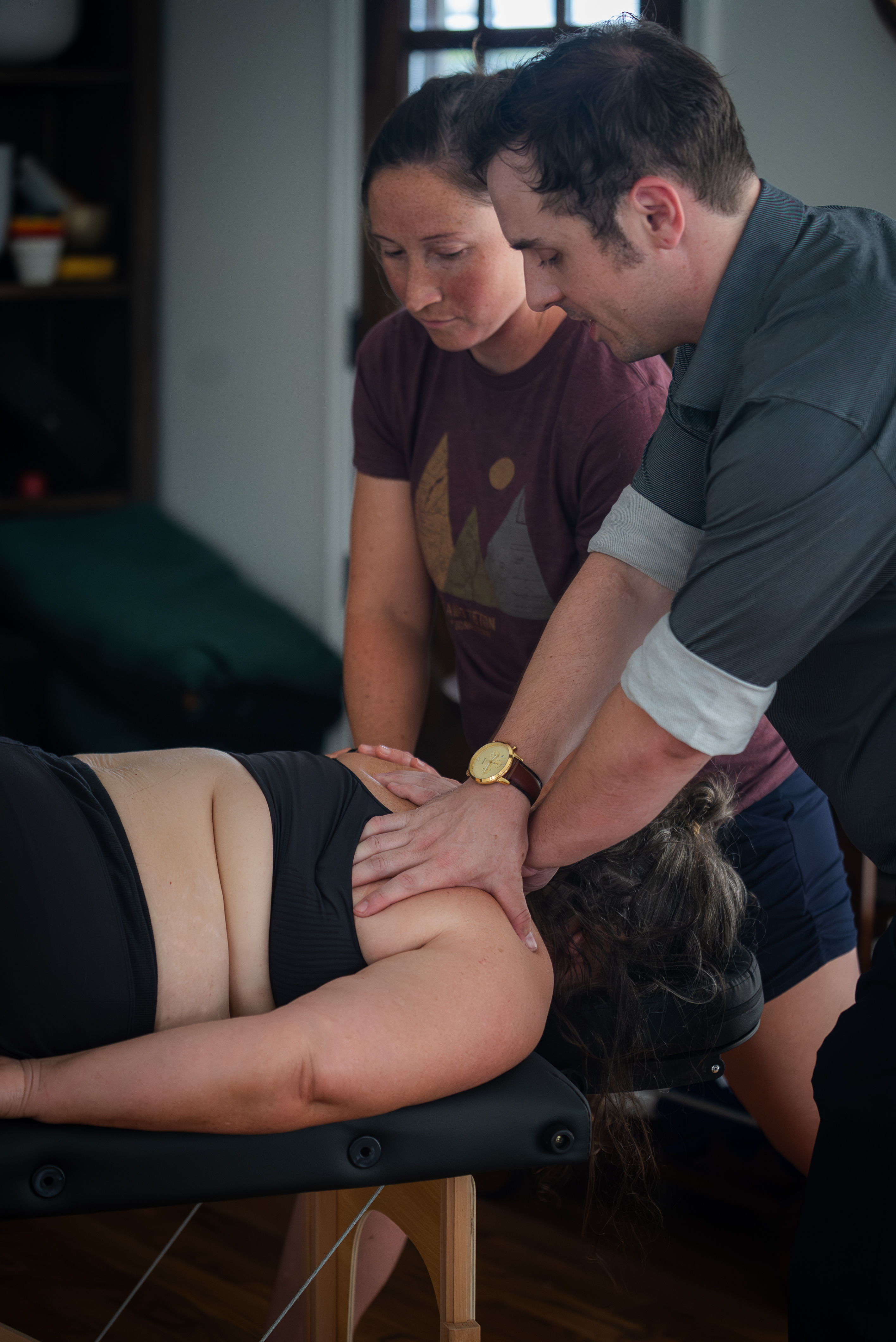
- Myofascial approaches for upper back, shoulders & arms
- Somatic principles: deep listening & non-verbal cues
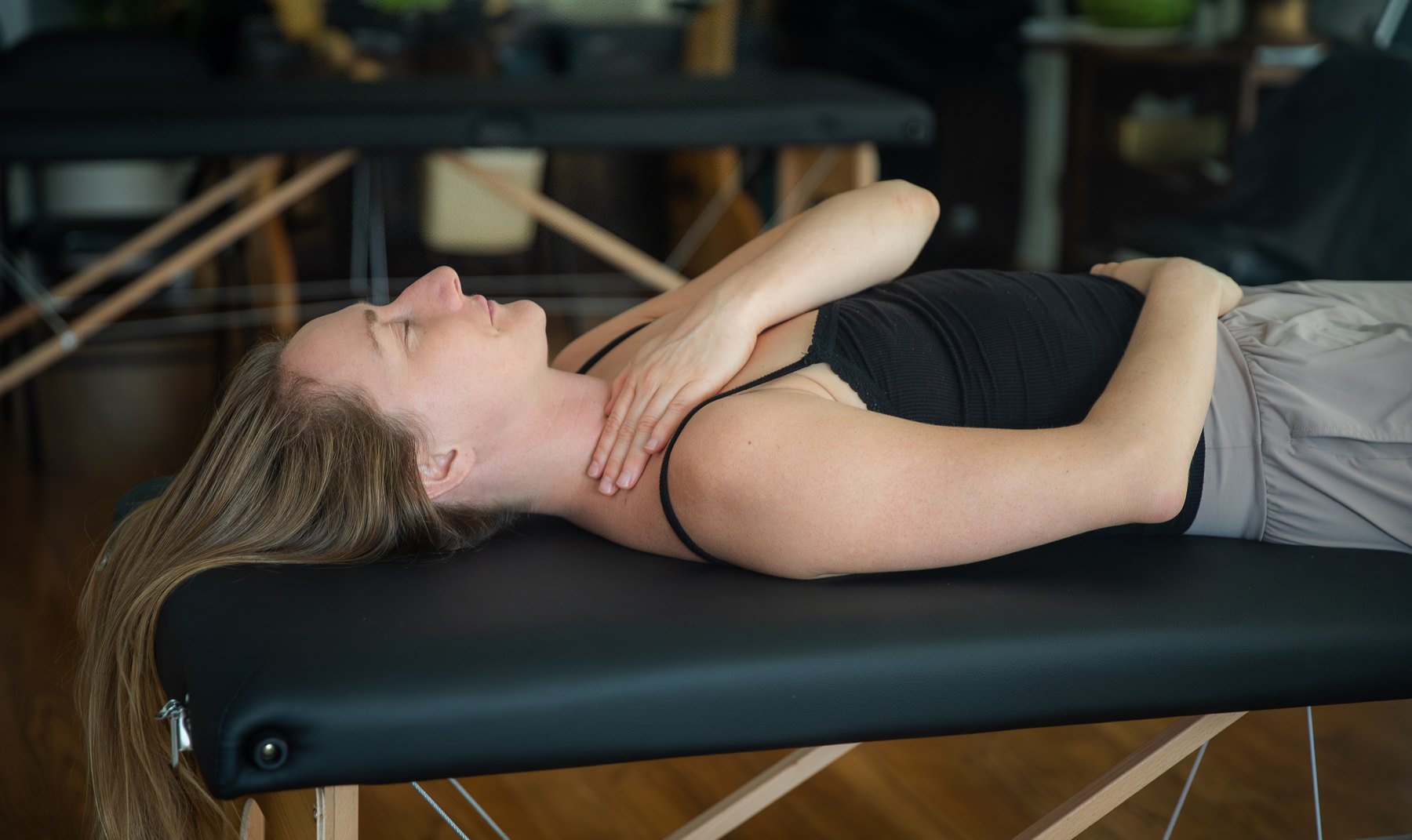
- Lower extremities & abdominals · diaphragm release, shoulders & neck
- Somatic principles: inviting client participation & feedback
- Full-body session practice
Day 3 Craniosacral Therapy Fundamentals
- Anatomy of the craniosacral system in the brain · spinal anatomy
- Impact of fascial restrictions on craniosacral structures
- Understanding, palpating & evaluating the cranial rhythm
- Diaphragm releases · cranial vault holds & still-point induction
Day 4 Craniosacral Therapy Techniques
- Occipital / cranial base release · sacrum release, spinal segments & craniosacral hold
- Anatomy of the cranial bones
- Frontal / parietal / temporal bone decompaction · sphenoid / TMJ release
- Full-session practice
Day 5 Somatic Dialogue and Emotional Release
- Ethics, safety & trauma-informed touch
- Transitioning from non-verbal cues to inviting dialogue
- Step-by-step breakdown & full process practice
- MyoSomatic theory: validating the fascia–somatic bridge — theory, research & gaps
- Combined modality approach & full 50-minute session practice
The room
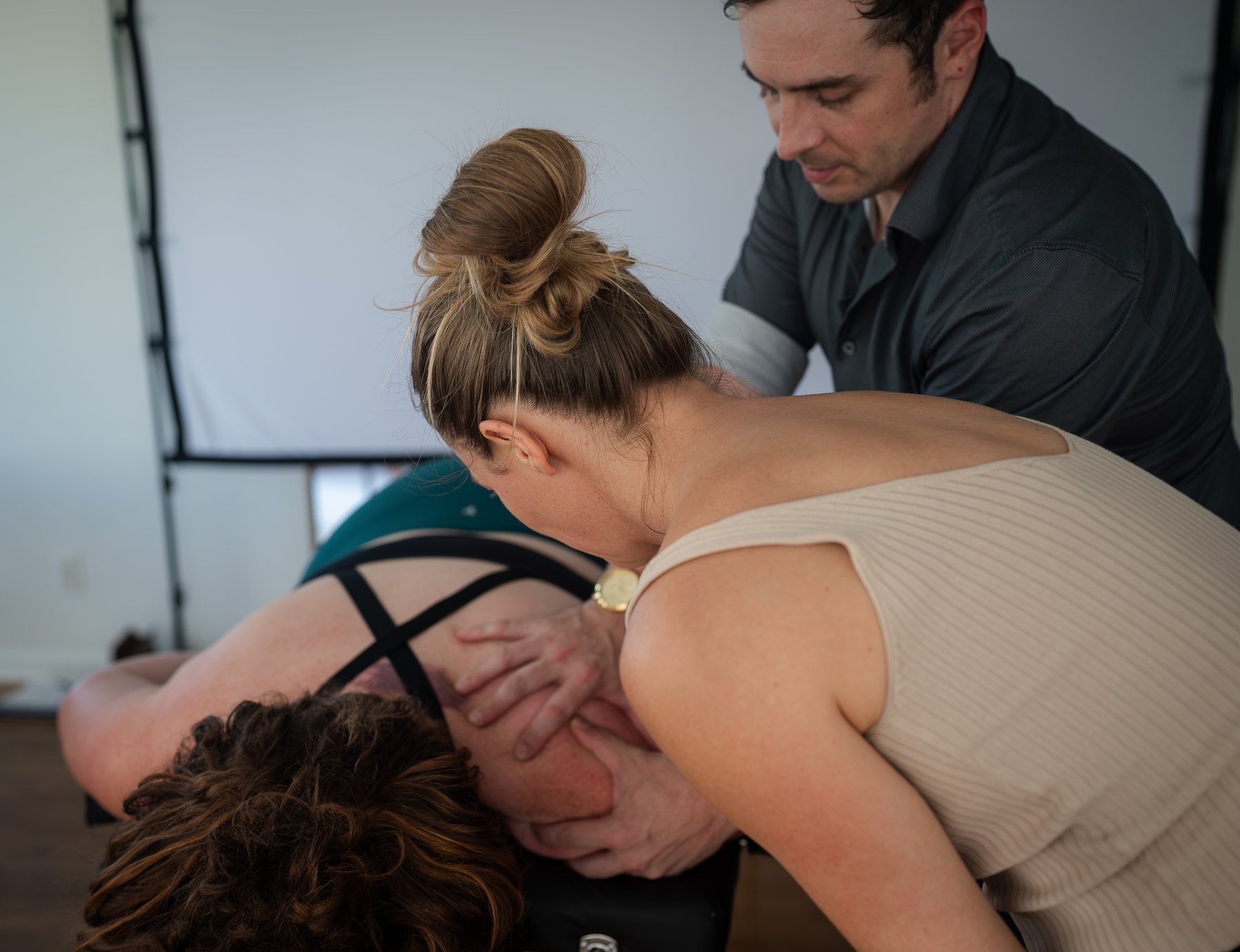
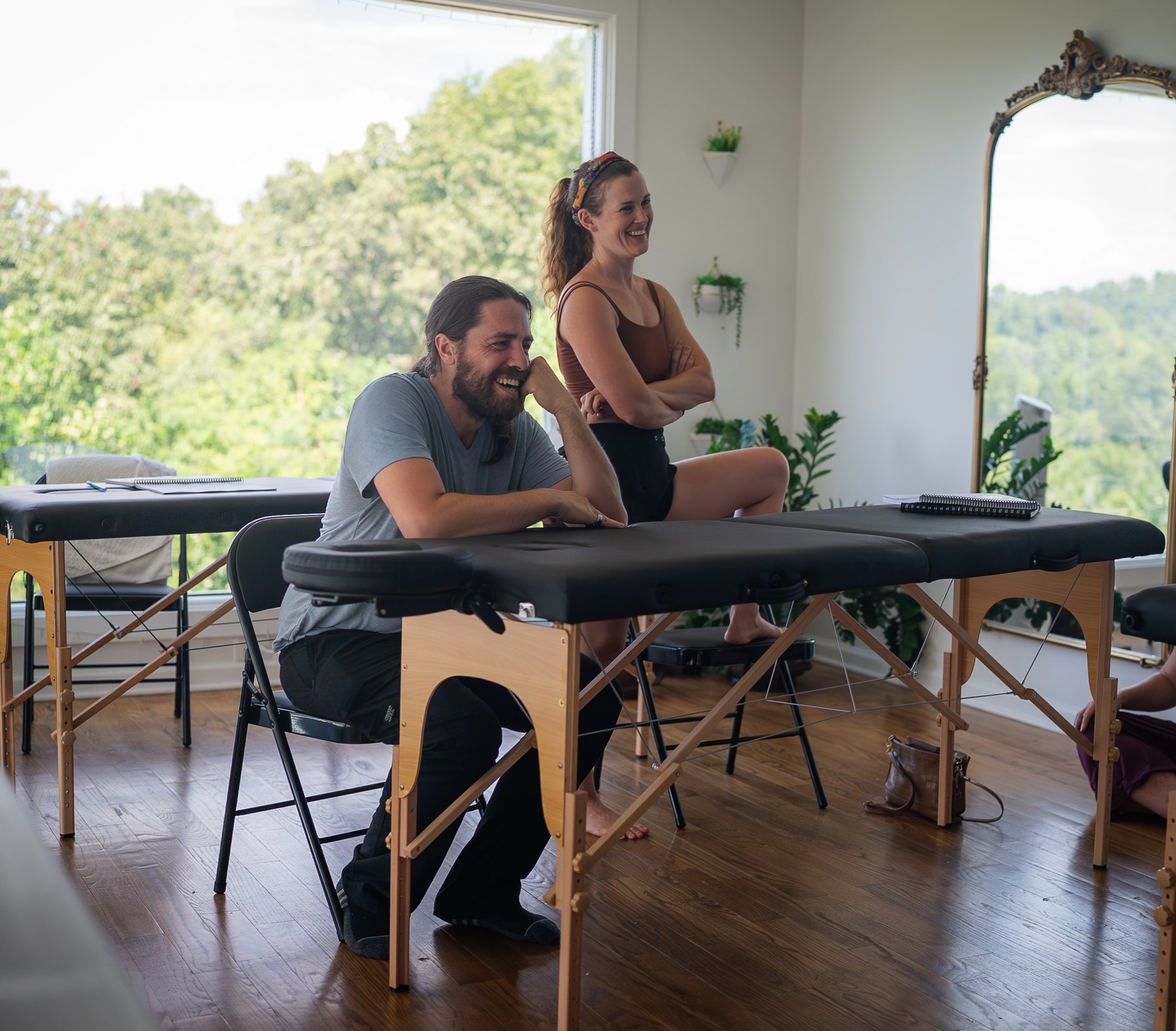
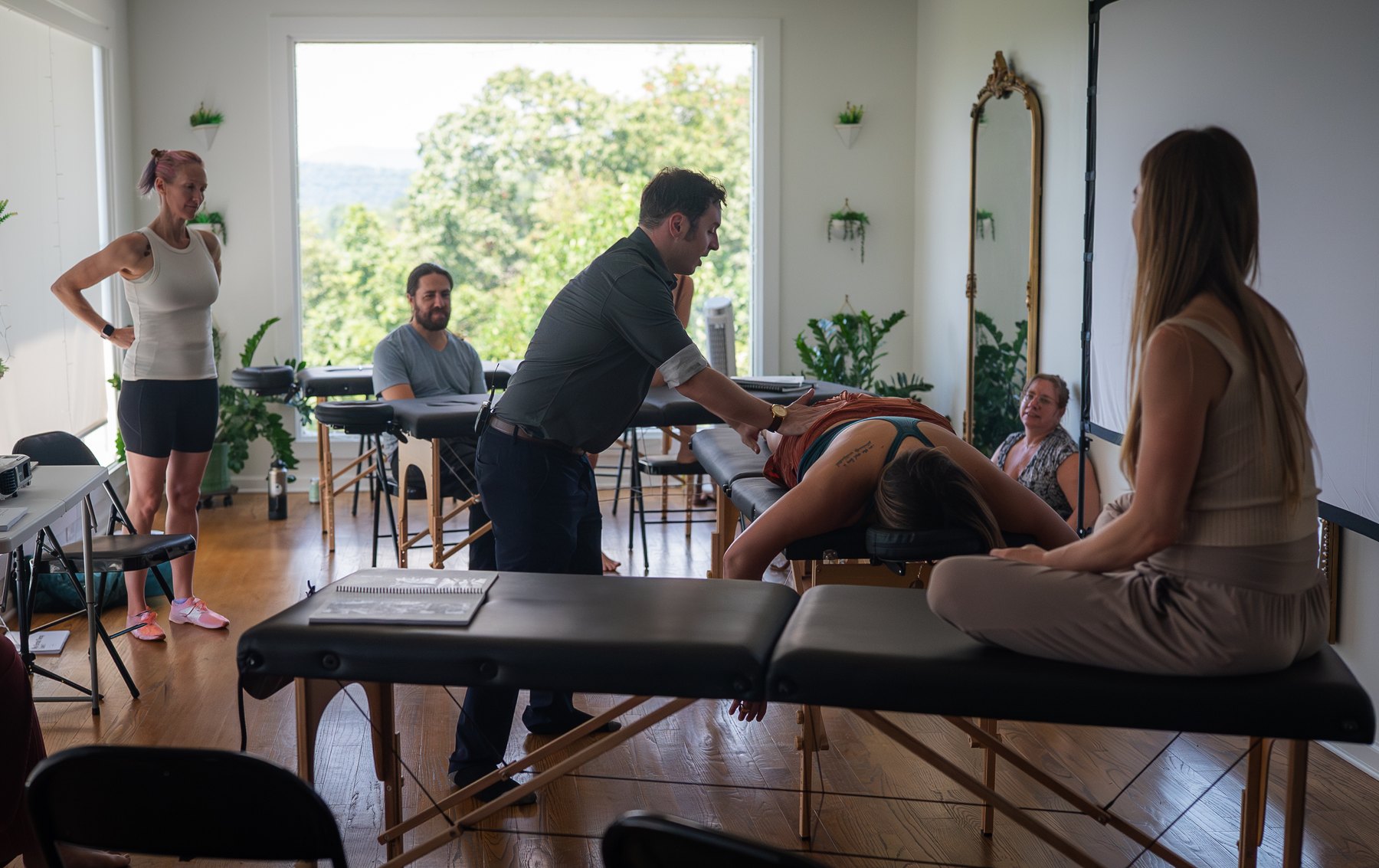
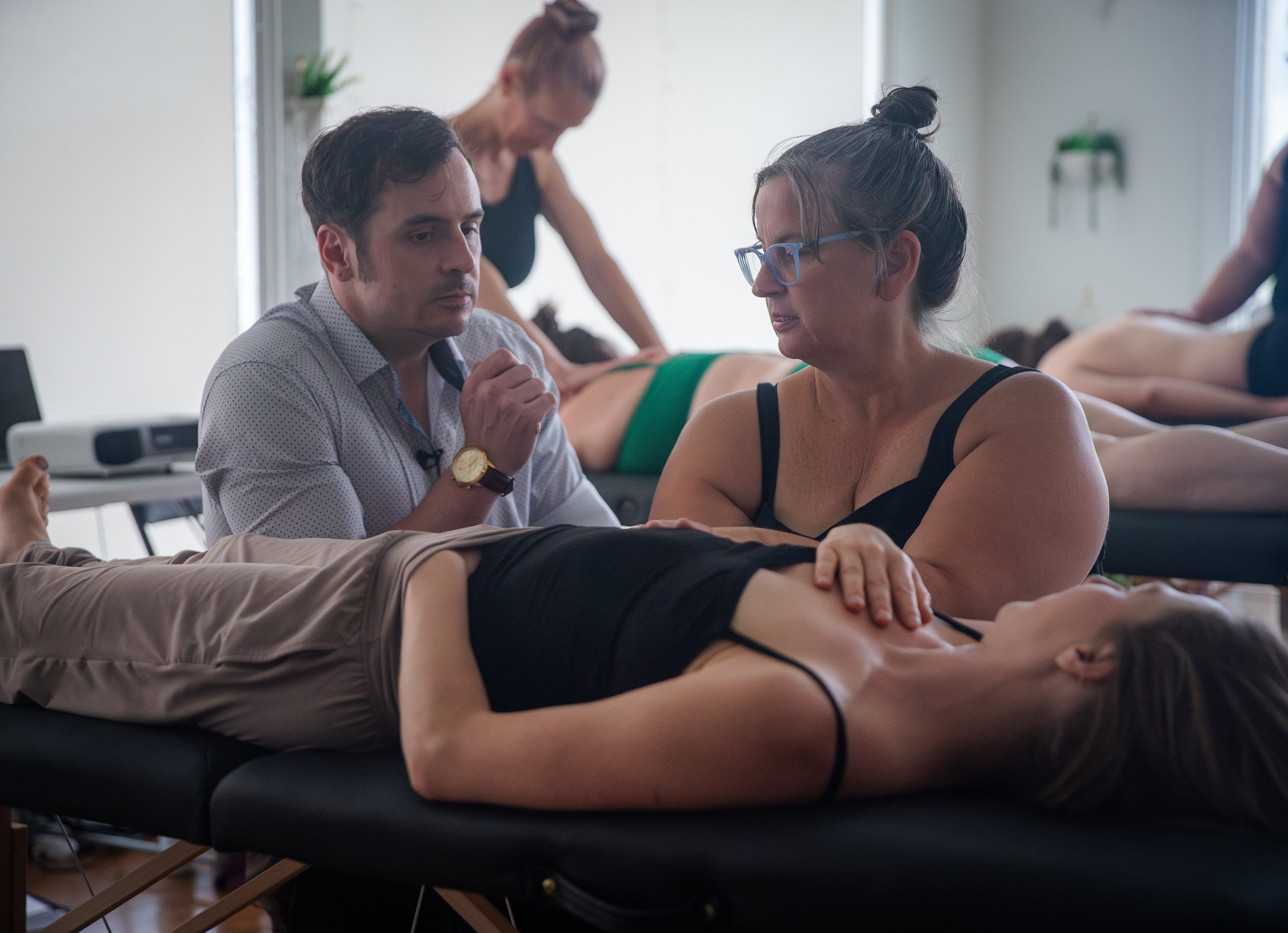
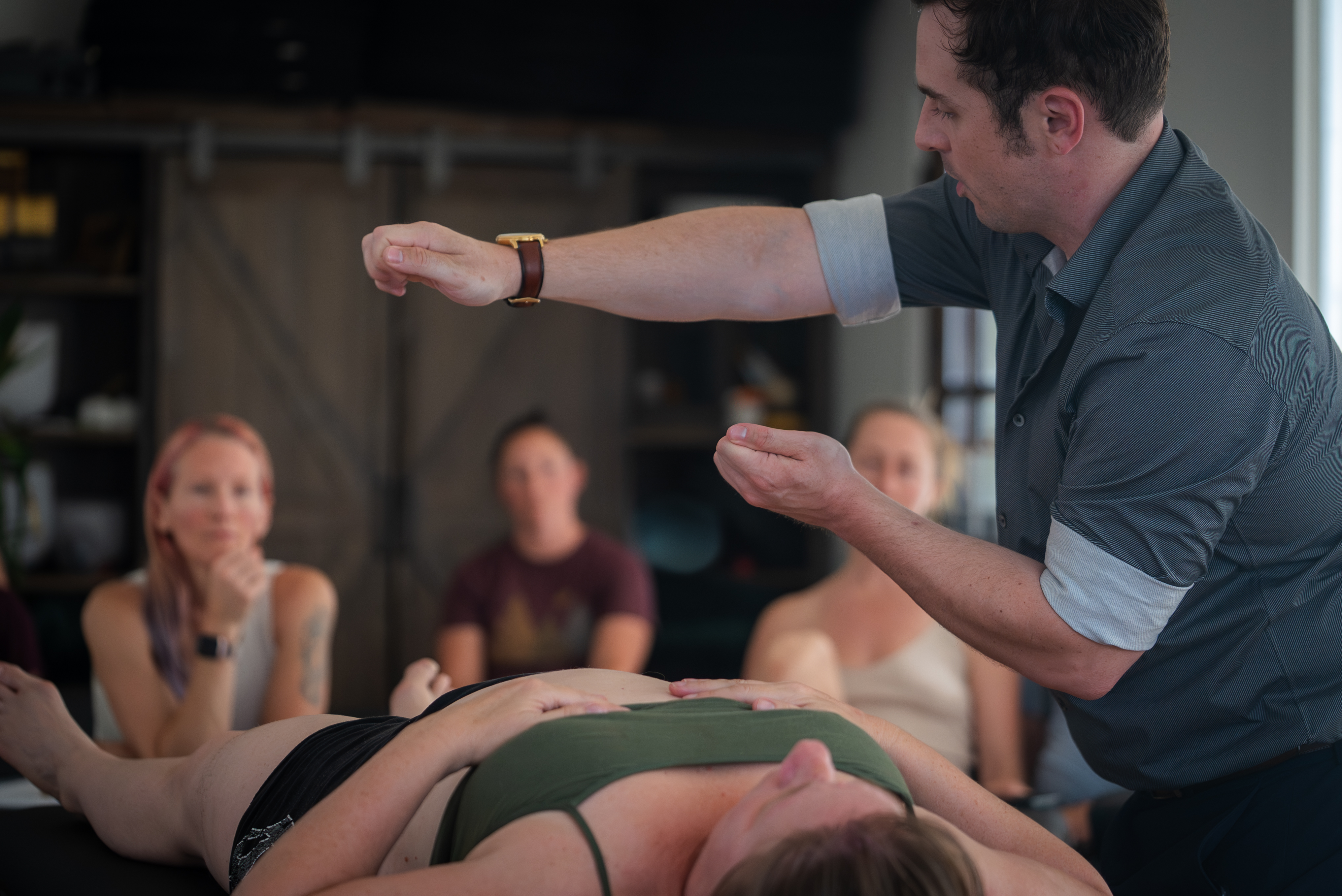
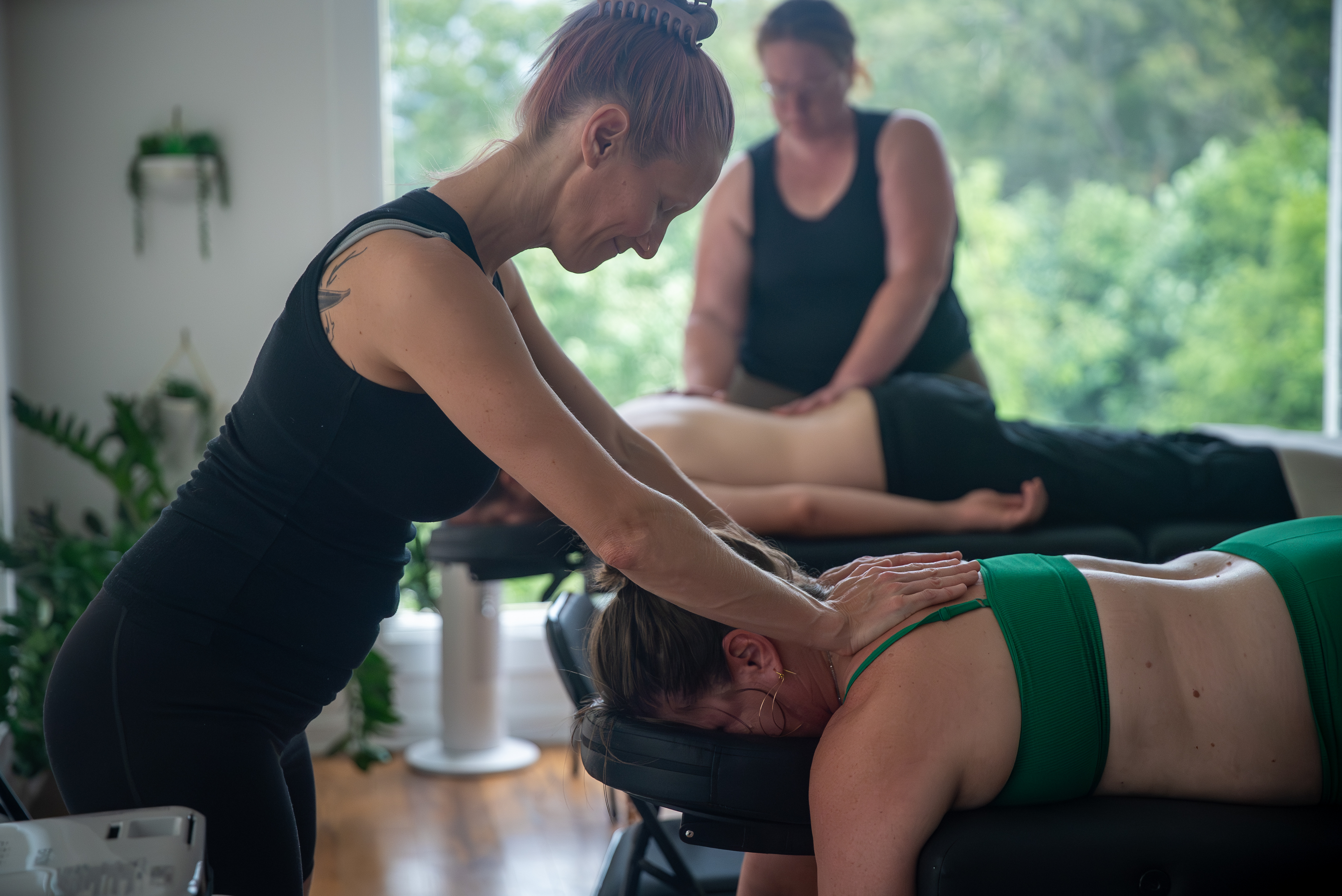
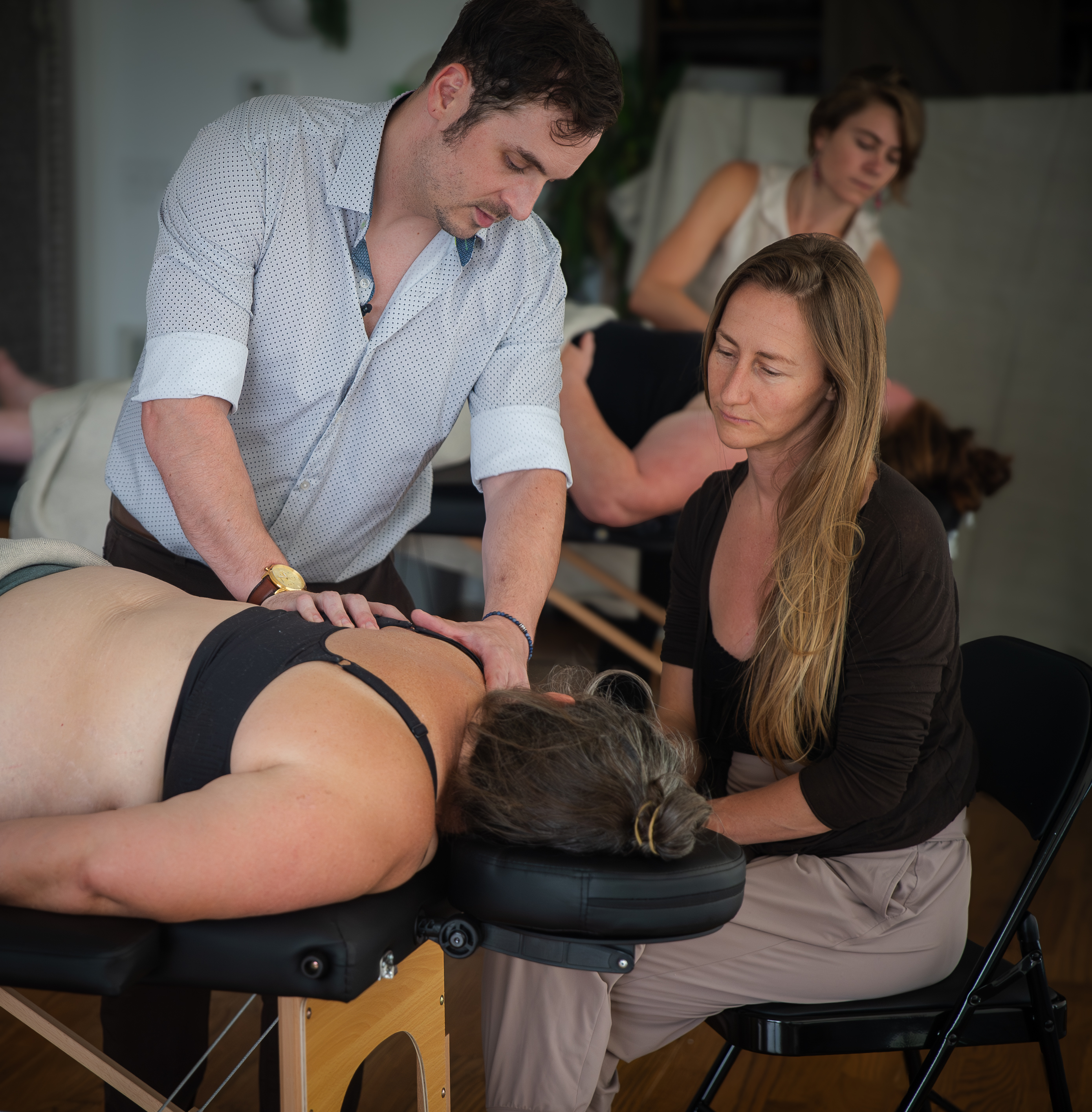
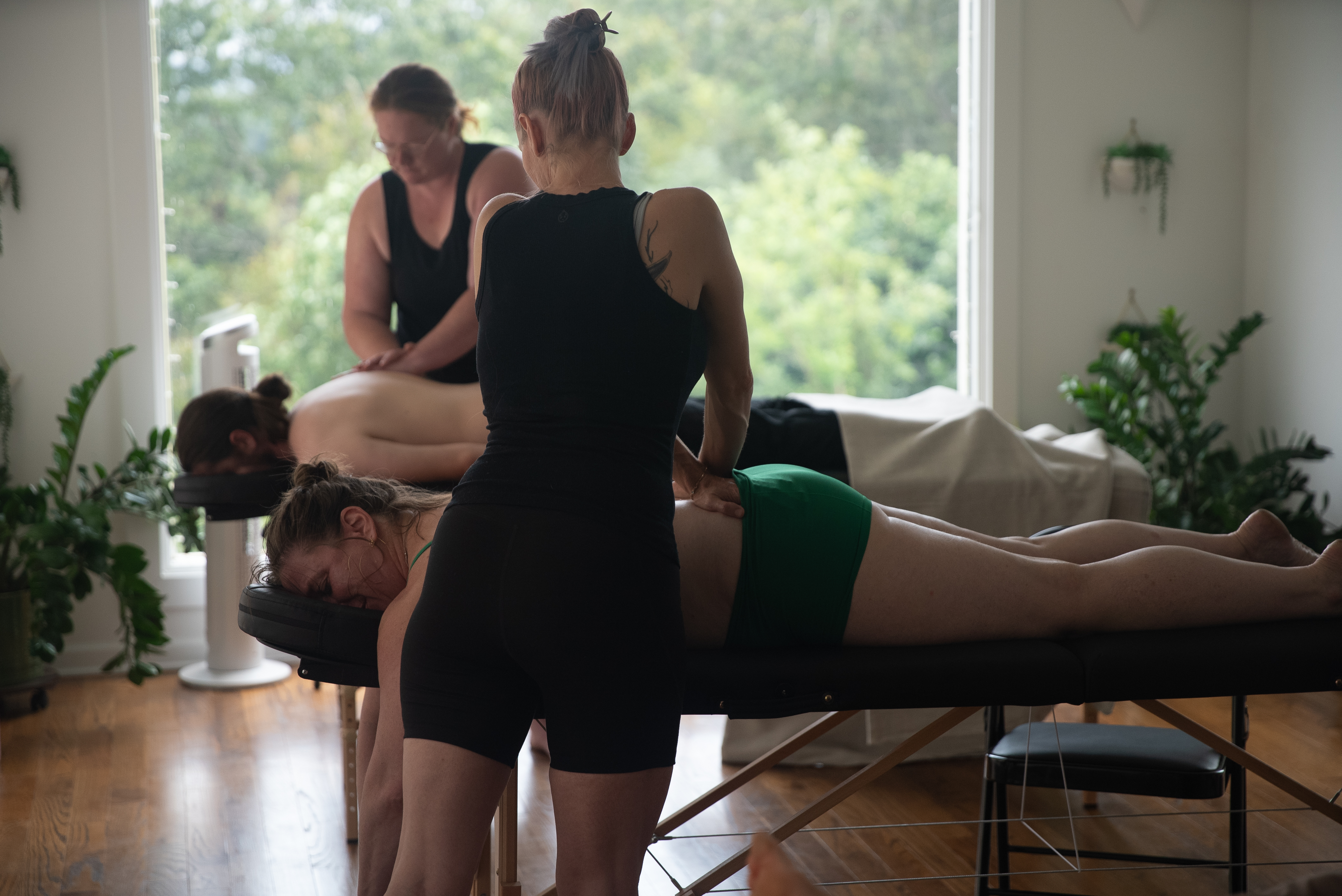
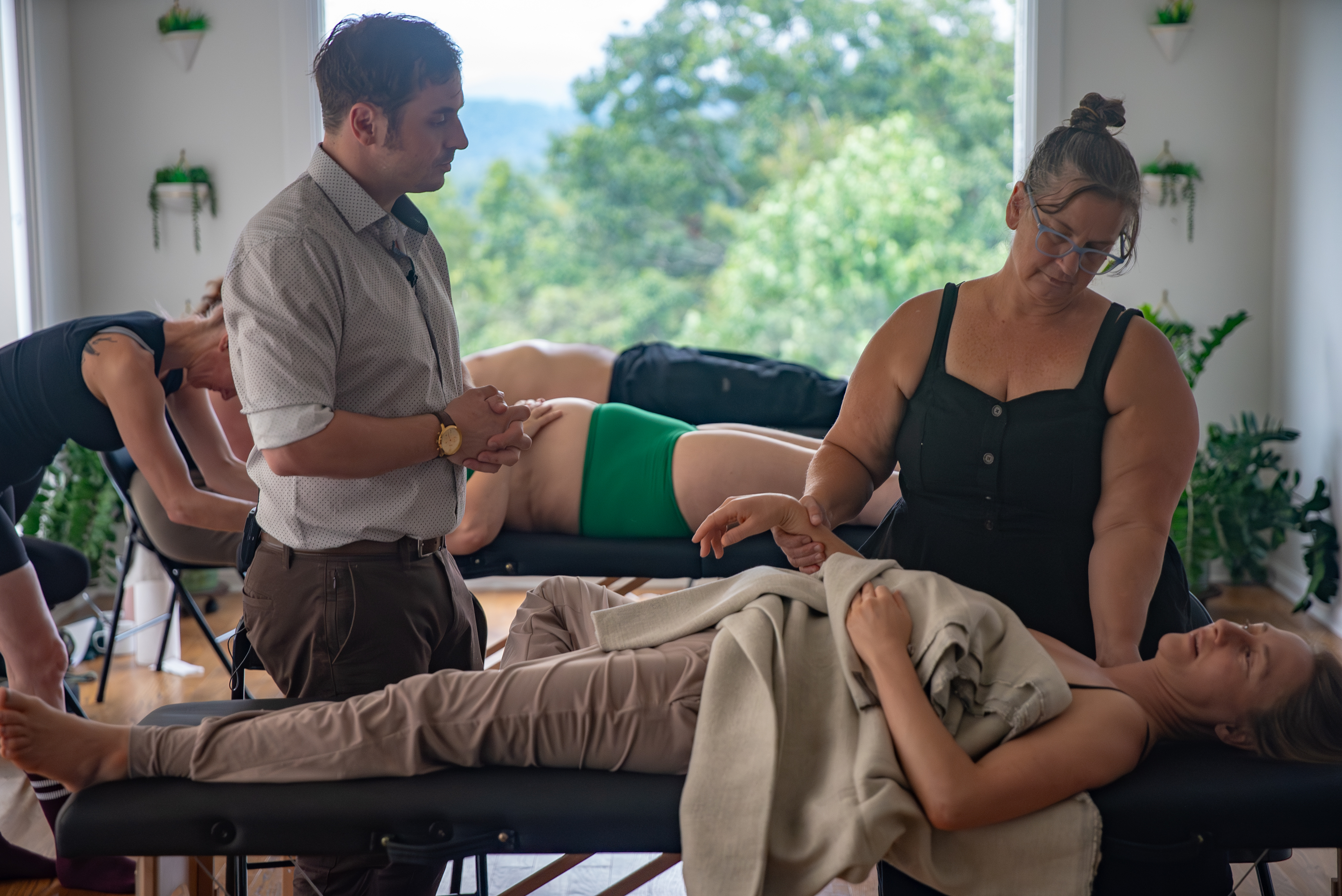
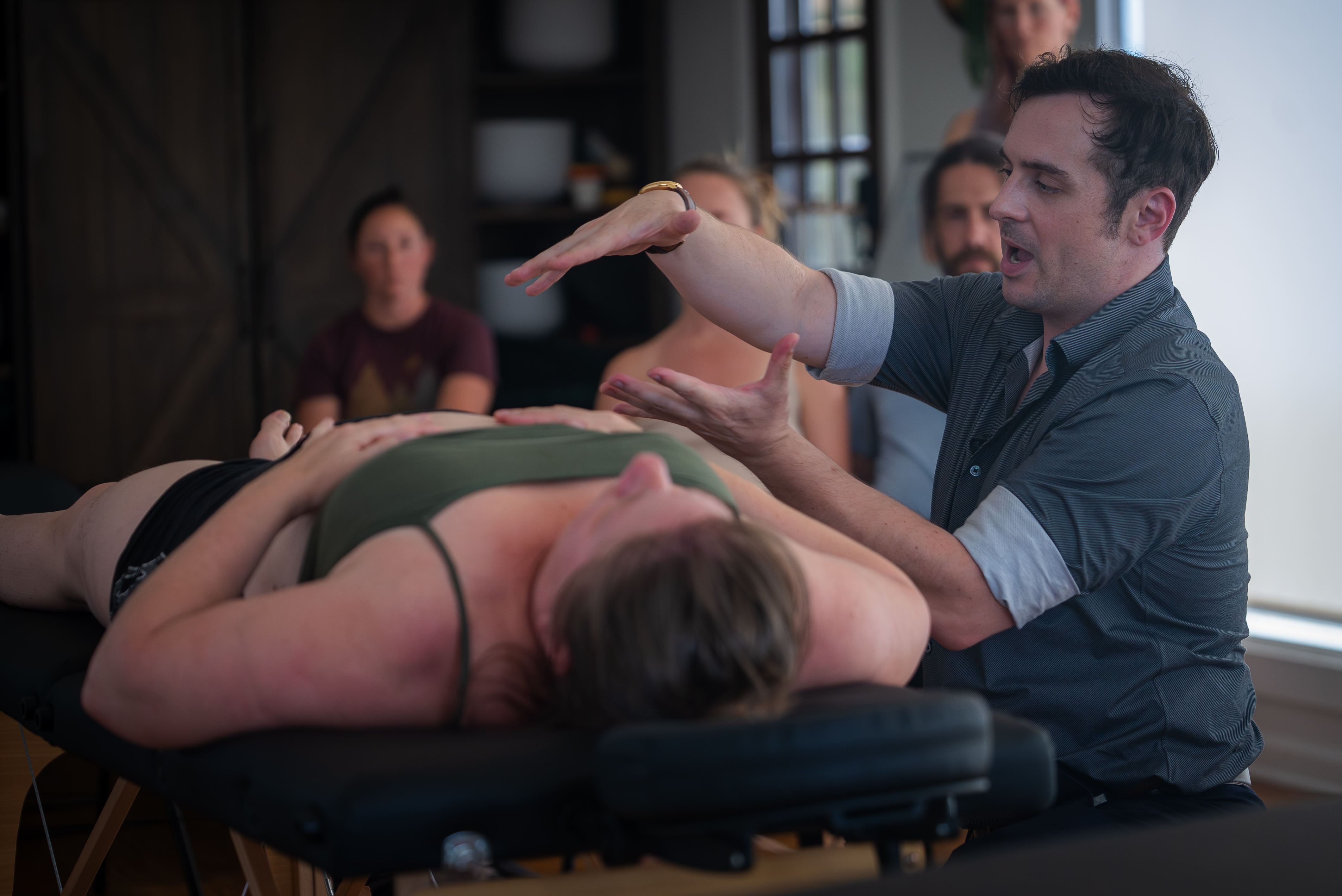
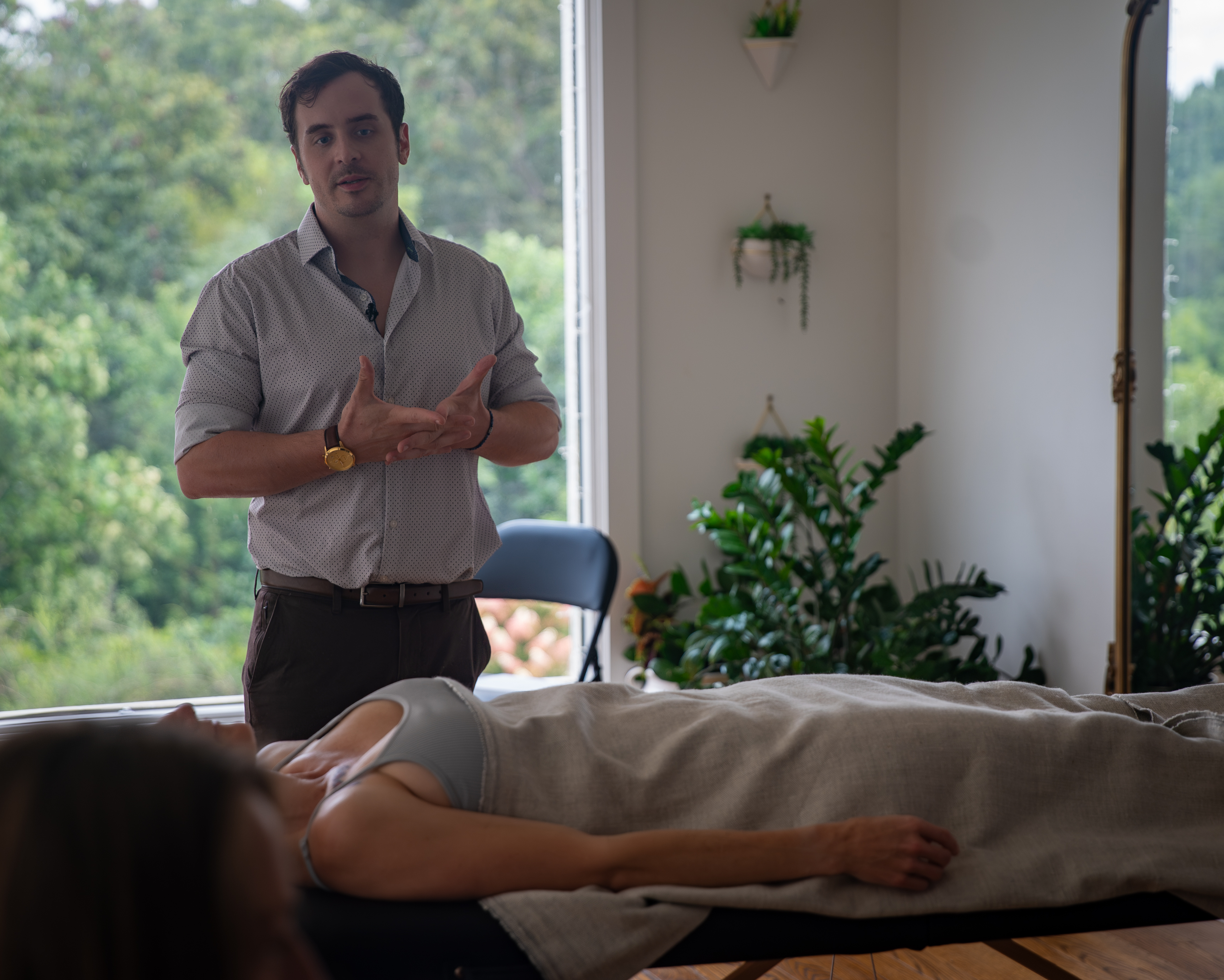
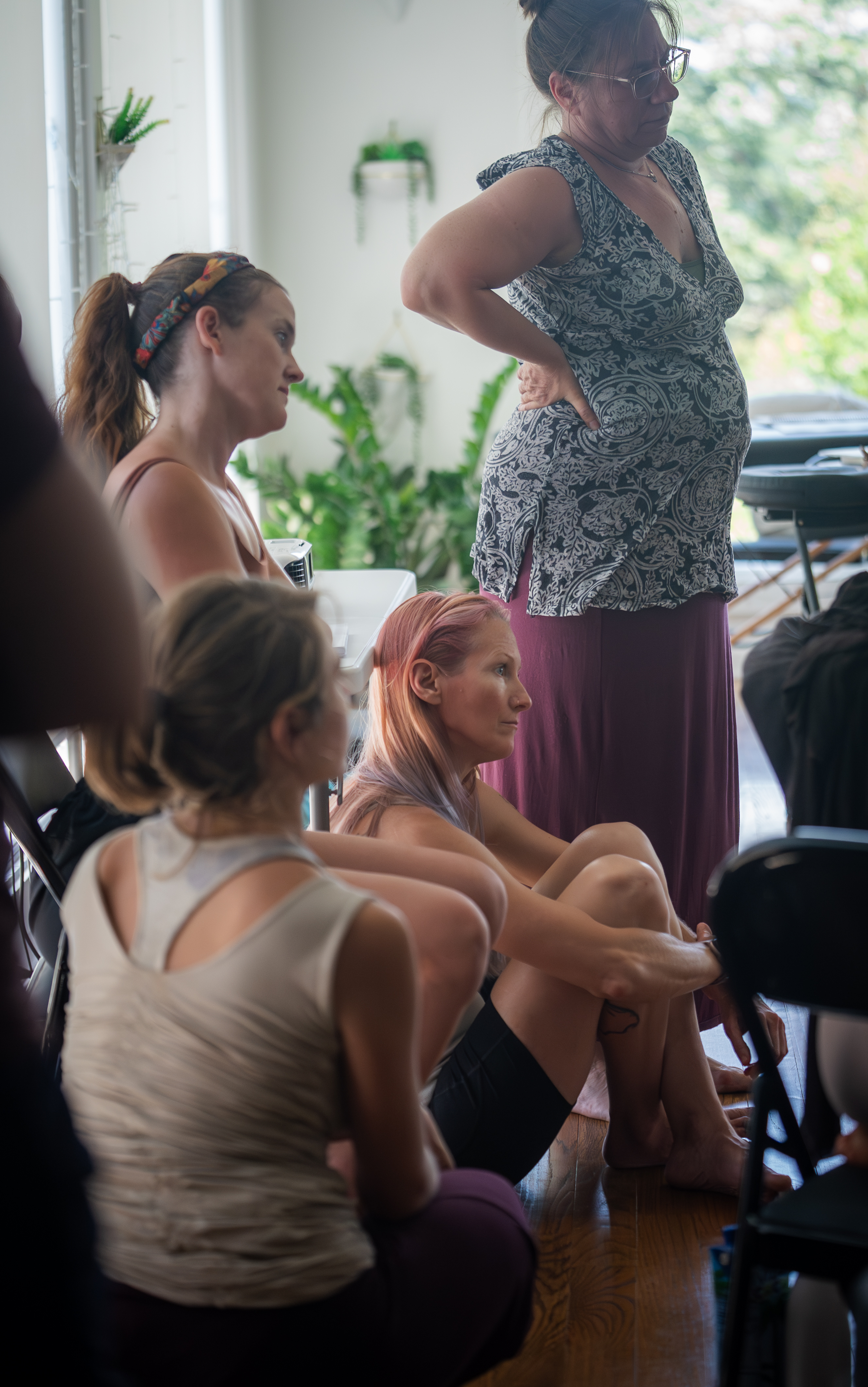
An intimate practitioner setting — not a 50-seat seminar. My goal is to keep classes small to ensure depth and connection: hands on from day one, with individual attention through every practice session.
Every practitioner is vetted for the container — readiness, ability, and safety for themselves and others.
Itinerary: 7 hours of theory and practice per day, 9:00am–5:30pm, with an extended mid-day break for lunch and integration. Because of the nature of this work, schedules adapt to our process — please speak for your needs and I'll do my best to accommodate everyone.
Previous hands-on bodywork experience is highly recommended — the class is paced at an intermediate level. Licensure to touch is required if you offer the work professionally.
NCBTMB Approved Provider #1002447 · 35 CE hours for licensed massage therapists
Remaining 2026 classes
Most of the 2026 schedule is full — limited seats remain.
On-site lodging & meal plans available Early-bird pricing until September 15th, 2026
2027 schedule TBA — a national tour is forming.
February 16–20 — St. Petersburg, FL @ Solely Massage
April 13–17 — Austin, TX @ Casa de Luz
May 18–22 — Asheville, NC @ French Broad River Farms
June 15–19 — Schenectady, NY @ The Stockade Inn
Class costs
$995 early-bird pricing ends October 15. After that, early bird is $1,295 and full price is $1,595.
A 50% deposit secures your space and early-bird pricing. NCBTMB approved continuing education: 35 CE hours for licensed massage therapists. Note for GA therapists: craniosacral content is not accepted for GA CEs — you will receive 21 credit hours for the myofascial & somatic psychology portions.
What students say
“I'm so deeply grateful and inspired by this work and what Daniel brings to the table. He guides us intuitively from the heart, through this delicate healing path. This is the upgrade I was looking for — for my own inner evolution and my clients.”— Margaret S., practitioner
“Daniel's ability to clearly explain complex techniques and connect them to real clinical applications made a huge difference in how I understood and integrated the material. I truly appreciate the time and attention you gave to everyone's individual experience.”— Jennifer R., practitioner
“Daniel did a great job at guiding us through the process of both learning the material and receiving the work itself. I felt safe throughout the training and able to ask questions to deepen my learning.”— Hailey S., practitioner
“Exactly what I have been needing in my practice to support my clients. Daniel is an excellent teacher & was amazing at supporting everyone.”— Caroline C., practitioner
“OUTSTANDING instructor & organization.”— Lena L., practitioner
Meet the instructor
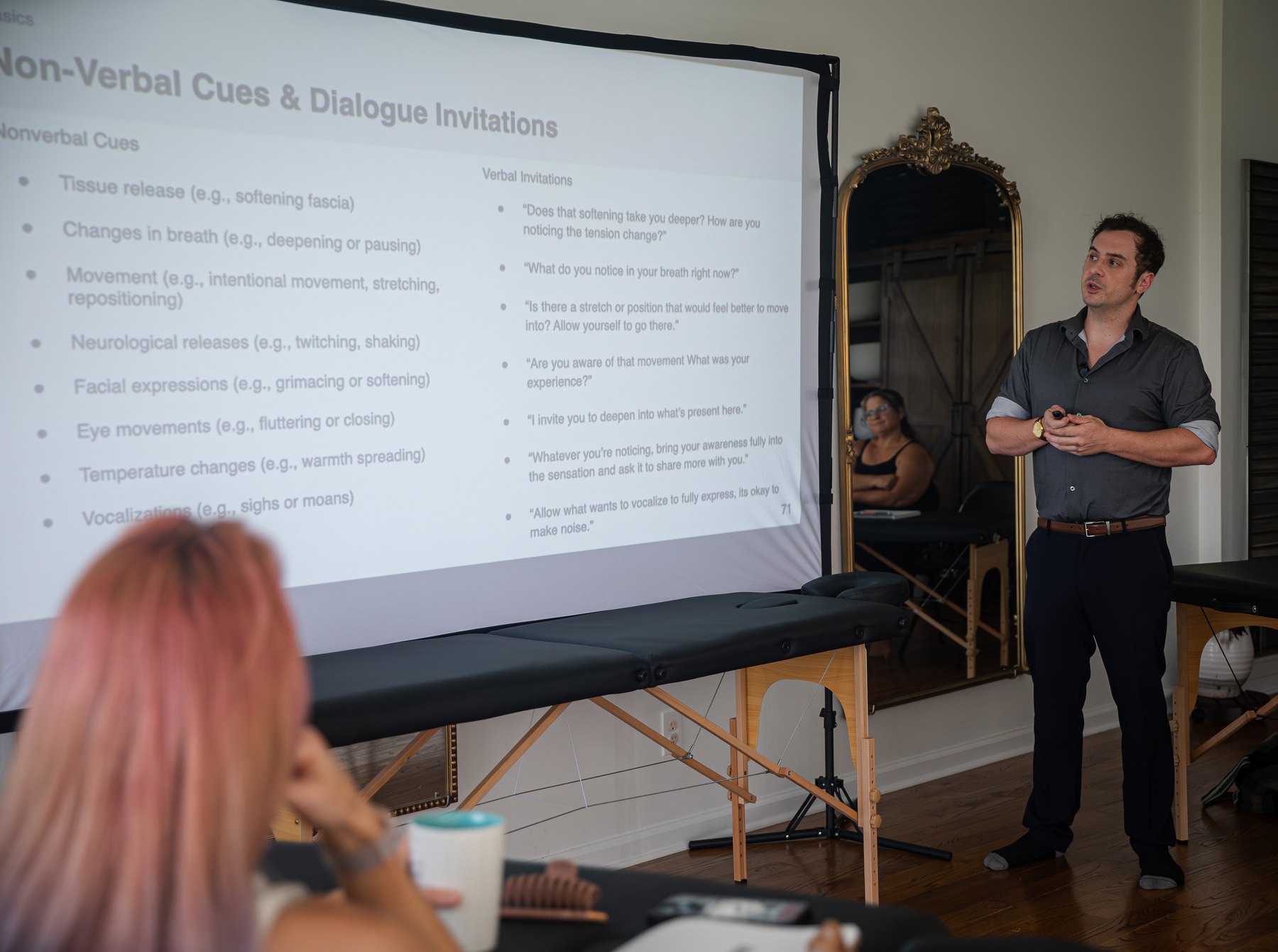
For nearly 15 years, I've been unraveling the body's mysteries as a therapist — working with the fascia, the nervous system, and the stories they hold. But my passion truly ignited when I started combining the modalities I was taught and opening the doorway to deep states of somatic release.
I don't just teach anatomy or techniques; I guide you into a deeper way of being with the body — listening to its subtle language, honoring its wisdom, and facilitating real, lasting change.
Daniel J. Wicker · NC LMBT #15677 · NCBTMB Approved Provider #1002447
What I teach
In the MyoSomatic Bodywork Practitioner Training, you won't just learn a set of techniques — you'll learn to feel. My approach is rooted in deep awareness, grounded in anatomy, and alive with intuition. You'll discover how to approach the body differently — staying with the felt sense of fascial remodeling and the craniosacral rhythm long enough to bridge from the physical tissues into working directly with the nervous system itself.
You'll master the art of sensing the body's cues and creating space for your clients' felt sense to emerge — whether it's physical tension, buried emotions, or soul-level shifts. I educate as I alleviate, giving you the context to understand the experience — not just for your clients, but for yourself.
If you're ready to stir things up, guide clients through the work of feeling their discomfort, and help them get to the bottom of what's really going on — I'm here to teach you how. Let's dive in.
Why I teach
When I learned I was a kinesthetic person — someone who needed to feel the world with his hands rather than approach it through conceptual learning — everything changed. My entire bodywork career is a testament to a simple truth: there are ways of sensing and perceiving that are just as valid as intellectual knowing.
I've watched too many intuitive therapists look at their gifts as not good enough because they couldn't be validated. The emergent fascia research is our bridge — the validation that our knowing is in our sense perception itself. I'll support you in claiming it fully, and in seeing just how the science of sensation confirms what our hands have always known.
And I've seen too many therapists hit a wall — chasing quick fixes, or forcing the body into change it wasn't ready for. My mission is to guide you into a gentler, more profound way of working: one where the tissue leads and you trust its timing — supporting a whole human, beyond any single mechanism, into a deep place of their own inner knowing, so they can move through their physiological holding.
FAQ
What are the prerequisites? Is this suitable for beginners?
What will it be like to receive the work while I learn?
I'm not a massage therapist — can I still attend?
How are hands-on practices managed? What's the dress code?
What accreditation do I receive? Is it recognized?
Is there an exam or test?
Do you offer payment plans?
When are you coming to my city, state, or country?
Still have questions?
Email daniel@totalityhealingarts.com · Phone (text only): 828-540-2593
DM @totalityhealingarts · or book a connection call
Begin with a conversation.
Enrollment and deposits happen on a connection call — so we get the chance to know each other, address your questions, and make sure you're prepared to get the most from the container.
Book your connection callCOPYRIGHT © 2026 | TERMS & CONDITIONS | PRIVACY POLICY